Separate short length from small size
A smaller regular size changes width as well as length. It may bring the hem closer to your preference while making the chest or upper arm uncomfortably narrow. Petite proportions address a different problem: where the features sit on the body.
Use each brand’s own measurements; a petite label is helpful only when its proportions match you. Lands’ End’s size guidance stresses using the relevant chart and consistent measuring methods, rather than relying on a familiar size name.
A person can need a shorter torso fit and a generous bust or bicep at the same time. Start with those requirements together. You do not need to squeeze into the smallest size to find a shirt that looks intentional.
Locate the four points that change an outfit
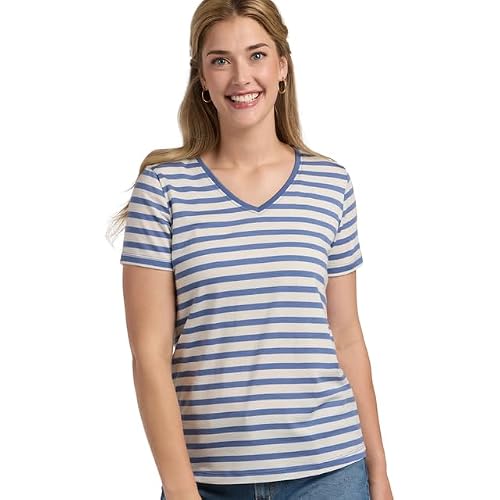
First, look at the neckline. A V that appears modest in a product photo may sit lower on a shorter torso. Next, locate the armhole: excess depth can leave fabric hanging under the arm even when the chest measurement seems right. Then check sleeve length and finally the hem.
For a regular set-in sleeve, the shoulder seam helps explain whether the garment is simply too wide or deliberately designed with a dropped shoulder. Raglan sleeves have no equivalent seam at the shoulder edge, so judge the drape and arm movement instead. Neither design is automatically better for petite proportions.
For the measurement procedure, use our online sizing guide. Here, pay particular attention to the distance between neckline, armhole and waist: shortening only the bottom edge will not move those other features.
Tucking and alteration solve different problems
A full tuck can absorb extra body length, but it may also create more fabric at the waistband than you want. A partial tuck changes the visible hem without fixing a low armhole or deep neckline. Try the styling you genuinely intend to use; do not let a photograph's tuck conceal a fit issue that bothers you when the shirt is loose.
Shortening a hem is a possible alteration, particularly if everything above it works. Ask a tailor about the exact knit before buying for that purpose. A curved hem, side vent, decorative edge, or very fine jersey can make the job more involved than a straight cut suggests. Alteration cost belongs in the purchase comparison.
A shorter body design may be useful without being officially labeled petite. Check whether it still covers you while sitting and reaching. A cropped description tells you the designer's intention, not the resulting length on your body.
When only the hem needs changing
If the neckline, shoulders and sleeves fit, compare the price of the shirt plus a quoted hem alteration with another naturally shorter model. If the upper body also needs changing, ask the tailor what that involves before committing; a simple shortening quote does not cover moving armholes or reshaping the neckline.
Use women’s merino shirts to compare the shorter silhouettes available, keeping the required chest and sleeve room in view. Save the measurements of the one you keep so your next purchase starts from a working shape.
Do petite shoppers need petite-labeled merino shirts?
Not necessarily. A regular garment with suitable proportions can work. The label is helpful only when supported by dimensions that match your needs.
Is hemming the best solution for an overly long tee?
It can solve excess hem length when the upper body fits well. It will not reposition a neckline, armhole, or shoulder, so evaluate those before committing to alteration.