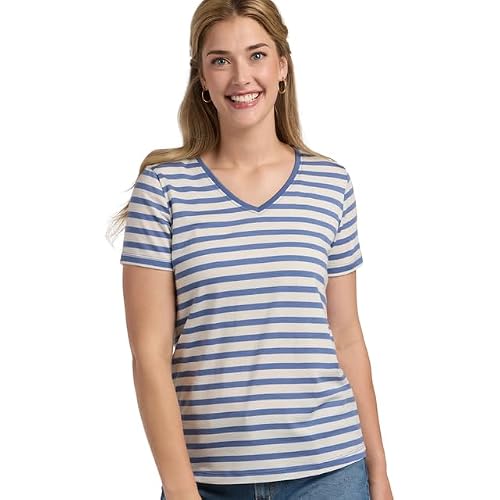
Choose a useful reference shirt
Match the job as closely as possible. Use a tee for a tee, a woven button shirt for a similar woven shirt, and a fitted base layer when that is what you are buying. A roomy sleep top is not a helpful reference for a close layer under a ski jacket.
Pick a garment that still has the shape you want. A stretched neckline or distorted hem can make the numbers misleading. Lay it on a flat surface, smooth it gently without pulling and keep a flexible tape straight rather than following folds.
Record whether the reference feels fitted, regular or loose to you. Those words are subjective, but your note preserves the reason you chose the garment. Numbers without a remembered fit preference can become confusing when you compare several shirts later.
Take measurements that you can reproduce
Read the destination brand’s measurement diagram first when one is available. Use its defined points so your comparison is meaningful. If the brand provides no method, keep your own method consistent and ask about any dimension that would decide the purchase.
| Measurement | Practical method | Common mismatch |
|---|---|---|
| Chest width | Measure flat across the chest at the specified level | Comparing half-width directly with a body circumference |
| Body length | Use the brand’s stated shoulder or back-neck starting point | Comparing front length with back length |
| Shoulder width | For a set-in sleeve, compare the specified shoulder seam points | Treating a raglan cut as if it has the same seams |
| Sleeve length | Follow the chart’s starting point and route to the cuff | Mixing shoulder-to-cuff with center-back-to-cuff |
| Hem width | Measure the garment flat at the hem without stretching | Comparing a curved hem at different heights |
Separate body dimensions from garment dimensions
Wool&Prince’s help center distinguishes body measurements from actual garment measurements. Check which kind your chosen chart gives. A shirt needs its intended amount of room around a body; the two sets of numbers should not be treated as interchangeable.
If a flat chest width is 21 inches, doubling that width gives a rough 42-inch garment circumference at that level. It does not mean the shirt is intended for every person with a 42-inch chest. Cut, stretch and preferred ease still matter.
Use one unit system throughout the comparison. Record a conversion explicitly rather than rounding several measurements differently. If the choice hinges on a small difference, repeat your measurement before treating it as decisive.
Use the differences to choose a cut
Make a short table of your reference shirt and the candidate size. Note which dimension would improve your current fit and which could create a new problem. Going up one size may add width you do not need while still failing to supply enough length.
If torso length is the issue, compare actual long or tall cuts rather than assuming a larger chest size will solve it. For a broader fit question, see how merino should fit. This measurement task gives that decision a concrete starting point.
Do not buy an intentionally oversized shirt on the assumption you will shrink it to fit. Care-related dimensional changes are not a precise tailoring method. The shrinkage guide explains why that is an unreliable plan.
Confirm the result when the order arrives
Before removing tags or washing, compare the new shirt with the reference and try it through the movements you need. Follow the retailer’s try-on and return terms. The chart helps narrow the choice, but it cannot tell you whether a seam or neckline feels right.
Keep a simple note of the model, size and measurements if it works. That creates a useful personal reference for future purchases without assuming the same brand size will remain identical across every model.
Can I double a flat chest measurement?
Doubling gives an approximate garment circumference at that point. Compare it with another garment measurement, not directly with a body-size recommendation.
What if the size chart only gives body measurements?
Measure your body using that brand’s instructions. Ask for garment dimensions if a particular length or width is essential; do not pretend the chart supplies information it does not contain.