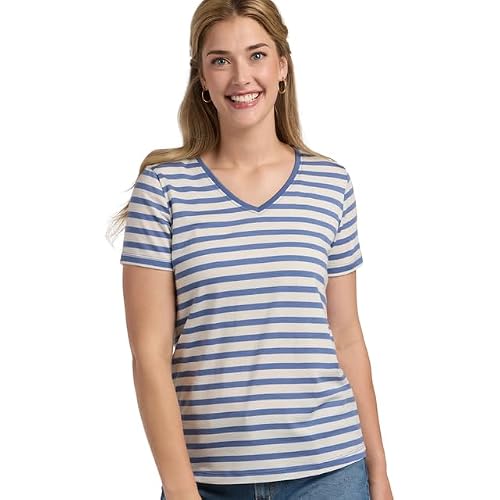
Decide whether this is underwear or your visible shirt
REI recommends a comfortably close fit for a moisture-managing base layer. That does not mean compression, and it does not require your casual T-shirt to follow the same silhouette. Decide which role you are buying before interpreting terms such as slim, regular or athletic.
If the shirt must do both jobs, try it with the outer layer you expect to wear. A loose hem that looks fine on its own may bunch underneath a fitted overshirt. A close underlayer may show more detail than you want when worn alone. Our shirt-versus-base-layer comparison covers that tradeoff.
Look for tension, not a particular letter on the label
With your arms resting naturally, examine the upper chest, underarms and hem. Pulling lines or a neckline drawn away from its resting shape are reasons to reassess the cut. Extra fabric is not automatically a fault: the question is whether it is useful ease or awkward surplus in the places you care about.
Raise both arms as you would to use an overhead shelf. Reach forward as if holding handlebars. Sit down and lean toward a table. Notice whether you must repeatedly pull the hem back into place or whether the underarm feels constrained.
For a collared shirt, inspect the placket while sitting. If it pulls open, a different size or pattern may work better. For a tee, focus on the neckline and sleeve opening rather than borrowing a dress-shirt fit rule.
Make online measurements answer a specific question
A size chart may show body measurements or the dimensions of the finished garment. Do not compare a laid-flat chest width with a body circumference and conclude the sizing is wrong. Read the chart heading first, then measure in the stated way.
Use a favorite shirt in the same intended category as your reference. A relaxed weekend tee is a poor reference for a snug ski underlayer. Our online sizing guide explains how to record that comparison consistently.
If width is right but the length is not, automatically moving up a size can introduce a new problem. A different pattern may be the better answer. See the dedicated longer-fit guide or petite-fit guide before trying to solve every dimension with one size change.
Do not order a bad fit hoping laundering will fix it
Buy dimensions that work now. Deliberately shrinking or stretching merino is an unreliable way to correct a poor initial fit.
This matters especially when replacing an older shirt. Your well-worn favorite may no longer match its original dimensions, and a current model may use a revised pattern. Keep its usefulness as a reference, but check the current product chart instead of assuming a familiar brand and size will reproduce it exactly.
Should I size up or down for merino wool?
Neither automatically. Start with the current model chart, intended fit and your measurements. Size changes alter several dimensions at once; if only length or shoulder shape is wrong, another cut may be better.
How tight should a merino base layer be?
Comfortably close without pulling, digging in or limiting movement. Check it beneath your intended outer layers; a tight-looking label description does not guarantee the right fit on your body.