
MERIWOOL
MERIWOOL Men's 250 Midweight Long Sleeve
The 250 Midweight uses interlock-knit merino for a denser base or midlayer than the brand’s 190 jersey tee.
The merino edit
MERIWOOL’s documented fabric weights make it possible to compare more than sleeve length. Start with the role of the top, then examine its knit and density.
As an Amazon Associate I earn from qualifying purchases. How our links work. Check Amazon for current price, sizes and availability.
MERIWOOL
The 250 Midweight uses interlock-knit merino for a denser base or midlayer than the brand’s 190 jersey tee.

MERIWOOL
A 190 g/m² jersey tee with an all-merino composition. It offers a documented fabric specification for shoppers comparing ordinary short sleeves.

MERIWOOL
At 400 g/m², this interlock-knit crew is the heavyweight option in the initial catalog. Its density is the reason to consider it, not a promise that one shirt replaces a winter system.

MERIWOOL
The women’s 250 crew uses an interlock knit intended for a form-fitting base or midlayer. Five color listings are grouped here instead of creating repeated product pages.
MERIWOOL
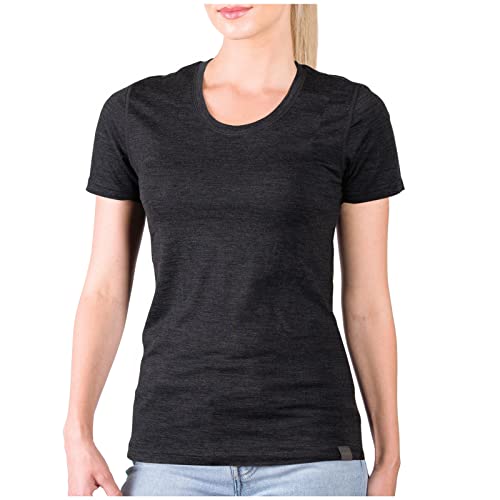
This women’s jersey tee supplies the 190 g/m² short-sleeve alternative to MERIWOOL’s midweight long-sleeve crew.

MERIWOOL
MERIWOOL’s 190 long sleeve uses jersey knit, making it the lighter-density alternative to the 250 interlock crew without changing to short sleeves.

MERIWOOL
A lightweight merino hoodie adds head coverage to the 190 jersey family, making hood shape the main distinction from the plain crew.

MERIWOOL
The women’s 190 hoodie combines an all-wool jersey body with an attached hood, extending coverage beyond the neck of a standard crew.

MERIWOOL
The 190 henley gives MERIWOOL’s jersey long sleeve a short front opening, useful if a closed crew collar is not your preferred neckline.

MERIWOOL
This women’s henley offers a short button opening in 190 g/m² merino jersey, giving the long-sleeve range an alternative to a crew neckline.
The 190 short-sleeve shirts use jersey fabric, while the 250 long-sleeve crews use interlock. The men’s 400 crew adds a heavier interlock option. These are all-merino choices with distinct constructions, not one shirt offered under several names. The manufacturer’s 180 long-sleeve design introduces rib knit as another option; check that the selected listing identifies that exact model before applying its specifications.
Use the lighter tee format when a short-sleeve shirt is the missing piece, or compare long-sleeve crews when you are assembling layers. A denser fabric does not establish the temperature at which your entire outfit will be comfortable. Also keep the numbers in context: 250 g/m² describes fabric density, not a 250-gram finished shirt. Choose the neckline and coverage you need, then check the relevant men’s or women’s sizing rather than assuming that matching fabric weights imply matching cuts.
Model comparison
Compare Smartwool Classic All-Season 150 GSM with MERIWOOL 250 interlock: fiber blend, fabric density, seam layout, and the layer your outfit needs.
Read the guide →Model comparison
Compare MERIWOOL’s documented 190 GSM tee with Woolly’s all-merino crew listing. Understand the generation caveat before choosing by fabric weight.
Read the guide →Model comparison
Compare MERIWOOL 250 and 400 long-sleeve crews by fabric density and layering role. Choose the weight that fits your existing winter outfit and activity.
Read the guide →Model comparison
Compare MERIWOOL 190 jersey and 250 interlock long-sleeve crews. Understand their fabric and micron differences before choosing a lightweight or midweight top.
Read the guide →Field notes
Compare merino fabric GSM without confusing it with shirt weight or a brand heat index. Learn what 150, 200, 250 and 320 can—and cannot—tell you.
Read the guide →